Symbiotic Cognition

AI agents are transforming how we build software, offering unprecedented speed and efficiency. However, this newfound power presents a critical question:
How do we harness AI’s potential without sacrificing our own growth as developers?
For this post, I will talk about something that can be called Symbiotic Cognition: a dynamic for intelligent collaboration with AI that preserves and enhances our cognitive skills, moving beyond “vibe coding” to truly elevate our craft. Because we deserve better.
What even is Symbiosis?
The interaction between two different organisms living in close physical association, typically to the advantage of both.
It’s about staying curious, asking the right questions, and understanding why the AI’s solution works, not just that it works. You can’t expect a LLM to do your work and call it a day, you know. To preserve a healthy mindset, one could consider a couple of reasons:
Synergy
A dynamic partnership where human intuition and creativity meet AI’s processing power and knowledge recall. This became easier to achieve with tools such as Claude Code, Kilo Code et al.
Cognition Retention
Purposefully using AI to reinforce, rather than replace, core problem-solving and critical thinking skills. Rather than asking the LLM to find out what’s going on, investigate the issue first and communicate with it on possible solutions that can be tested.
Skill Amplification
Leveraging AI to explore new techniques, optimize workflows, and maintain a sharp, evolving skillset. Think of it more as a pair programming session, rather than a intern.
As DHH once said (tweeted)…
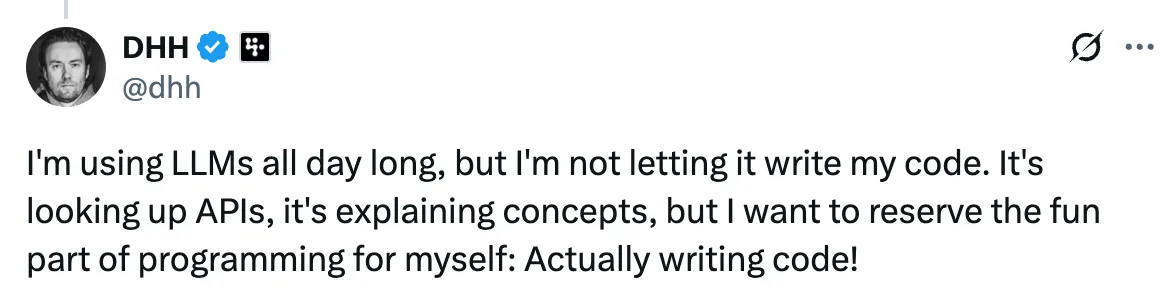
I mean… who doesn’t enjoy working with Javascript, right? Erhm…
You still need to code
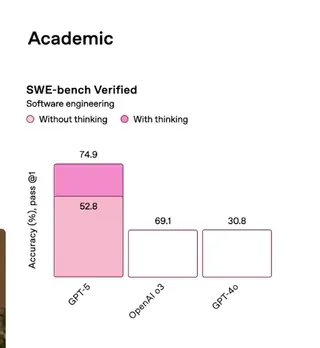
Yes. That chart was shown during openAI’s GPT-5 reveal stream. No, I am not joking.
We’re not AGI yet
The key to a truly symbiotic relationship with AI is active engagement. Tools like Cursor are not just for code generation; they are powerful co-pilots designed to augment your capabilities, not replace them.
Preserving Cognition
Instead of asking AI for a direct solution, use it to explore complex codebases, understand intricate system flows, or dissect unfamiliar APIs. Cursor’s “Ask AI about this file/selection” feature encourages you to formulate questions and analyze responses, strengthening your problem-solving muscle and maintaining a deep understanding of the underlying logic.
Enhancing Skills
Leverage AI to learn new frameworks, master advanced refactoring techniques, or debug obscure issues. By explaining generated code or suggesting alternative approaches, Cursor acts as a knowledgeable mentor, exposing you to best practices and accelerating your learning curve. It’s about thinking with the AI, not letting it think for you.
The Good and The Bad
Let’s explore a couple of scenarios where an LLM can turn things sideways in the blink of an eye — or unblock you of a 3h bughunt session.
Make no mistakes
 claude sonnet 4 on Cursor
Blindly copying an agent’s code can lead to a shallow understanding of your project. When errors surface, you’re left debugging unfamiliar territory, missing crucial learning opportunities and risking fragile, unmaintainable solutions. You can go even further and call that a SaaS and try to sell it online, which can expose security issues and messing with users’ personal data is no good.
Empowering Expertise
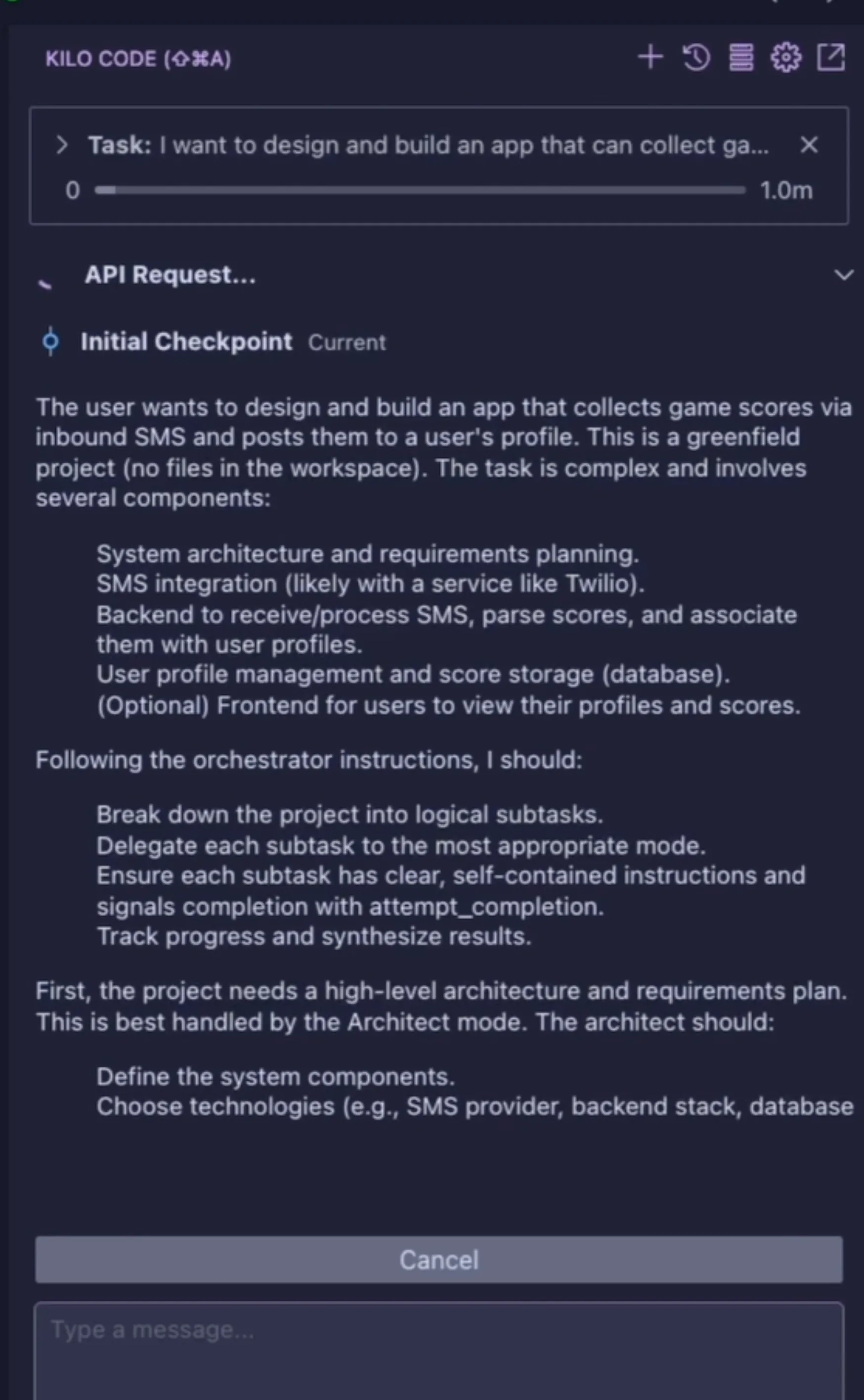 gpt-5 on Kilo Code
Engage GPT-5 as a thought buddy. Ask it to explain its logic, propose alternatives, or identify edge cases. This interaction deepens your comprehension, strengthens problem-solving skills, and allows you to integrate AI’s power with your own evolving expertise.
Mastering New Things
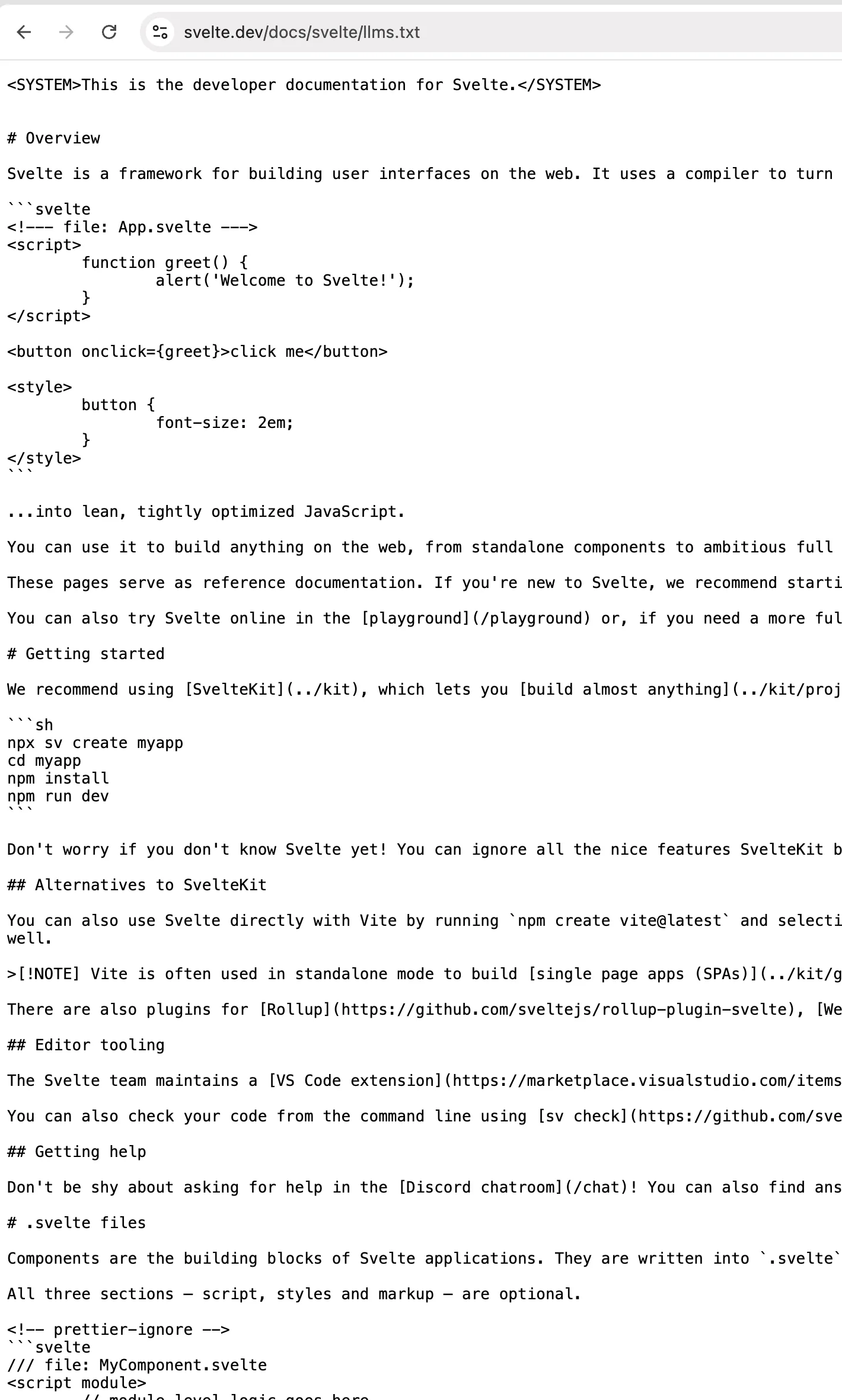 svelte-kit llm.txt
Say you want to learn SvelteKit. Docs are scary. No one wants to touch it. When asking about it to your friends, they all laugh in Nextjs ISR language. Well fear not! Most of the frameworks and libraries are adopting a concept called LLM.TXT that aims to provide as much context as possible to your agentic code editor, giving you a better hand to navigate in a new context and finding that grip way quicker than you expected. Add it in your [Cursor|Claude|Codex|Opencode|Charm] Rules and you’re good to go!
Closing
Thank you for your time! Here’s to our next decade of symbiotic coding.
Moving forward
- BYOK for personal projects
- Keep your codebase as close as you can to our knowledge and context
- Do NOT code blindfolded — Assess, be skeptical and thorough to every line of code from an LLM
- Utilize your time to enhance your soft skills as a peer, debugger, code reviewer and make sure your understanding is in pair with what is being generated
- Never ask an LLM if 9.11 is larger than 9.9, or how many R’s in “Strawberry” (although some models are getting this one right after a couple of attempts)